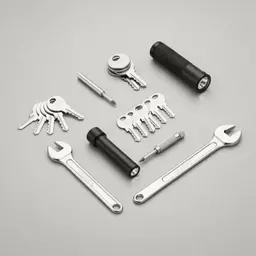

A key bundle can look complete while leaving several questions unanswered. One key may belong to the motorcycle, another to a luggage box and a third to a lock that is staying with the owner. Before a handover, turn that mixed collection into a clear inventory that explains what is present and what remains uncertain.
The useful distinction is between having an item and knowing its function. A key that looks familiar is not automatically a verified spare, and an old tag is not a public label. Organise the bundle around accurate descriptions, agreed inclusions and appropriate handling of security information.
Define what the buyer needs to know
For an owner preparing a sell motorcycle for cash enquiry, a key inventory can accompany the condition description. State how many relevant keys or fobs you have, which accessories have separate keys and whether anything is missing or unverified. Ask the buyer what further information is needed without assuming that a particular key count guarantees an offer.
Keep the inventory focused on the actual motorcycle and the items included with it. Its purpose is to explain the bundle, rather than provide a security audit or establish the machine's mechanical condition. A complete-looking set of keys does not prove that every lock, electronic function or accessory works.
Write the first version while you still have time to resolve ordinary sorting questions. If you discover a missing key or an unexplained replacement, record that openly. A short, accurate note is more useful than calling the set complete because the keys were stored together.
Count the keys without guessing their roles
Begin with a count of the items you can physically locate. Distinguish a conventional key, a fob and a separate accessory key in ordinary language. Avoid assigning a technical type or declaring a key to be a master merely from its colour or shape.
Give each item a simple private reference in your notes, such as ignition key A or luggage key B. The reference should help you identify the item without publishing a code, a detailed blade image or other security material. Keep the actual keys securely stored while preparing the list.
Use a few clear status descriptions:
- Present and associated with a known function.
- Present, but its function or current operation is uncertain.
- Expected or previously recorded, but not located.
- Belongs to an accessory that is excluded from the sale.
Describe the basis for any verified function. A recent professional check and an owner's memory from several years ago are different kinds of information. Where the evidence is limited, say so instead of converting a remembered use into a current guarantee.
Do not force a key, dismantle a lock or operate a potentially faulty motorcycle to complete the list. Record the limitation and ask an appropriate professional what assessment is needed. The inventory should reduce ambiguity without creating a new problem.
Separate motorcycle and accessory keys
An accessory may have its own key even when it is attached to the motorcycle. List luggage, storage boxes and separately included security devices as their own items where relevant. Connect each key to the inclusion it accompanies rather than putting every object under the heading motorcycle keys.
Check the agreed inclusions before assembling the final bundle. If a luggage box is staying with you, its key should not silently appear as part of the motorcycle sale. If the box is included but the key cannot be found, record that as an unresolved item and discuss it with the buyer.
Remove unrelated household and workplace keys from the proposed handover bundle. A mixed keyring may have served you well in daily use, but it does not make a suitable description of what another person is receiving. Keep unrelated access items separate throughout preparation.
Avoid leaving loose keys in a photograph simply because they were on the bench. A public image can imply that everything shown is included. Use the written inventory to establish the bundle and leave sensitive close-ups out of the public gallery.
Record observations separately from diagnosis
A fob that did not respond on one occasion has an observed symptom, rather than an established diagnosis. Record what happened, when it happened and any relevant professional findings you already have. Do not label it as needing only a battery unless that conclusion has actually been established for the item.
Use the same approach for a stiff lock, a damaged key head or an unfamiliar replacement. Describe the condition you can see and keep any workshop explanation attached to its original scope. If you do not know why the item behaves that way, leave the cause open.
Keep replacement history factual. You may have an invoice for a supplied key or a record of lock work, but those records do not necessarily describe every component currently fitted. Note the date and work described without extending the statement to unrecorded parts of the system.
A buyer should be able to distinguish your observations from a technician's assessment. Use wording such as function not recently checked or replacement recorded on the attached invoice where that is accurate. Avoid a broad working perfectly claim when the evidence covers only one function at one time.
Treat cutting and electronic recognition separately
Physical appearance alone is an incomplete guide to a modern vehicle key. The explanation of vehicle key coding distinguishes a cut key from an electronic identity recognised by a vehicle's immobiliser. It illustrates why a matching-looking key should not be assumed to provide every required function.
For a motorcycle, confirm the relevant arrangement through the correct owner information or a professional familiar with its make, model, year and fitted system. Do not transfer a procedure from a different vehicle or assume that every locksmith supports the same equipment.
Keep the inventory at the level of the information you actually possess. If you have a key that fits a storage lock but have no current verification of ignition operation, state those facts separately. Do not turn a limited observation into a claim about electronic authorisation.
There is no need to include programming instructions in the handover note. The useful information is what is present, what has been assessed and which questions remain. Any security work belongs with an appropriate provider and the correct verification process.
Prepare a focused professional enquiry
If a question needs a locksmith or dealer, prepare a short brief before making contact. Include the motorcycle make, model and year, the items currently available and the symptom or uncertainty you want assessed. State whether the enquiry is about identification, a missing item, a damaged key or a recorded lock problem.
The site's guide to preparing for a locksmith enquiry offers broader preparation context. For this task, keep the question specific and ask whether the provider handles the particular motorcycle and key system. Do not assume that general automotive services establish model-specific capability.
Ask what information and ownership verification the provider requires, and how it should be supplied. Share private records through an appropriate channel with the intended recipient. A public advertisement or general comment form is not a suitable place for security codes or a complete identity document.
Clarify the proposed scope before authorising work. Ask which functions will be assessed, what remains outside the assessment and whether further checks are needed. Request a written account of completed work so the eventual handover description reflects what was actually done.
The guide to choosing a locksmith in Bendigo provides additional selection context. Treat provider suitability as a question to verify directly. Avoid promising a buyer that a replacement will be simple, inexpensive or available by a particular day before the relevant provider has assessed it.
Keep security information out of public material
A key inventory does not need to reveal the information used to reproduce or authorise access. Keep key codes, security cards, detailed key images and relevant private records out of public photographs and descriptions. A count and a clear status note can explain the bundle without displaying those details.
Separate your private working record from the version used in an initial enquiry. The private record may identify the location of a securely held card, while the shared description simply notes that relevant supporting material is available for an appropriate handover. Do not leave the card visible beside the motorcycle for a photograph.
Before sending a document, check its whole page and background. A useful invoice may also contain unrelated personal details. Prepare a suitable sharing copy where needed, preserve the original and confirm that the recipient needs the information being provided.
If a key or security item is missing, do not assume that finding another key resolves every security question. Explain the situation to a suitable professional and ask what further action is appropriate. Keep the result of that discussion separate from any unverified expectation.
Reconcile the bundle before handover
Compare the physical items with the latest inventory and the agreed inclusions. Check that a key has not been added, removed or placed on a different ring since you wrote the note. Update the count rather than relying on an earlier photograph of the bundle.
Keep unresolved items visible in the final description. An accessory key still not located should not disappear from the notes because the collection day has arrived. Explain the uncertainty and agree how it is being treated before presenting the bundle as settled.
The article on motorcycle security considerations provides wider context for treating access items carefully. Keep custody and security arrangements clear during preparation, and avoid leaving keys unattended with a vehicle while sorting other belongings.
Make the final note easy to read. List the items being handed over, connect accessory keys to their inclusions and identify any remaining limitations. Keep irrelevant household access items and private working papers out of that bundle.
A fictional three-item inventory
Imagine an owner finds two similar black-headed keys and a smaller key stored with a luggage box. The initial note says three motorcycle keys. It gives no indication that the small key belongs to an accessory or that one of the larger keys has not been checked recently.
The revised note identifies two keys believed to be associated with the motorcycle, gives the known basis for that description and marks the second key's current function as unverified. It lists the smaller item separately with the included luggage box. No security code or detailed blade photograph is shared publicly.
The owner then asks an appropriate provider a specific question about the uncertain item. If an assessment is completed, the note is updated to describe its actual scope. If it remains unresolved, the buyer receives that limitation clearly rather than an unsupported statement that all three keys work.
Give the next person a clear account
A useful key inventory explains the items being transferred and the limits of what is known about them. It distinguishes motorcycle keys from accessory keys, separates observations from diagnosis and keeps private security information away from public material.
Prepare it early, reconcile it against the actual bundle and update it when the facts change. The result should be a clear account that another person can follow without having to guess what each item belongs to or what the description really promises.